
Clarkelyn Man Fighting Uphill Battle to Make Jorts Relevant Again

strong_nigga_jean_shorts
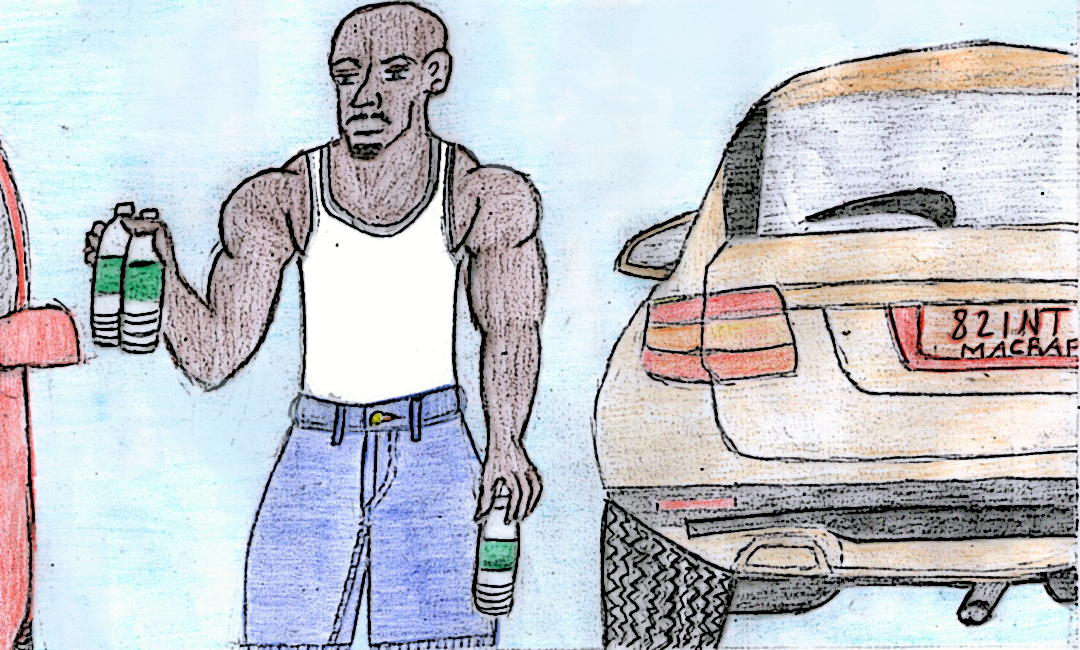
An irrationally strong nigga wears jean-shorts and a wife beater while selling cold waters on Goodship Ave. in Clarkelyn. Photo by Notsquiat.

Friends and family think he’s insane. But, one Clarkelyn man is on a mission to accomplish the impossible. He wants to make jorts popular during the summertime again.

George James — a 26-year-old native of East Macrapolis, Clarkelyn — is determined to bring the look back. He believes that jorts, also known as jean-shorts, could be the last best weapon against the mass infiltration of feminine clothing into the wardrobes of men throughout the world.

“We’re living in grave times,” James tells The Bluffington Roach. “This clothing item could very well decide, once and for all, whether men are going to dress like actual men during the summertime or whether they’re going to dress like promiscuous teenage girls.”

James wasn’t initially alarmed by the fall of jorts. In fact, he was quite comfortable with the rise of cargo shorts in their place. He felt that cargo shorts worked well with tighter fitting tees and button-ups. But, he’s seen how rapidly that style has devolved into deep V-necks, testes-cutter cargos, and nut-hugger ca-pants.

“When I saw Dwyane Wade show up to that playoff game last season dressed like Tamar Braxton and Russell Westbrook dressed like a trendy sperm cell, I was compelled to act,” James says. “I can’t cure the entire epidemic alone, but I believe that the return of regular-sized jean-shorts could be monumental.”

James is steadfast in his quest to propel the antiquated wardrobe item back into popularity. But, he knows that jorts have fallen far from grace over the last decade.

Jorts reached their pinnacle of popularity during the early 2000s. Although the style was quite popular long before that time period, the early 2000s were something of a golden era for jorts. Clothing stores were stocked to the brim with numerous different styles of jean-shorts — from sandblasted jorts to NBA-patched ones.

Many anthropologists cite rapper 50 Cent as the last real star to make jorts a serious part of his summer wardrobe. The return and rise of tight-ass clothing, which began during the latter part of the last decade, has rendered jorts nearly obsolete.

There are still isolated pockets of men around the city who have remained loyal to the jort. Pretty much any man between 31-44-years-old isn’t afraid to dust off an old pair of jorts and rock them with a pair of Air Force 1s with yellowing soles.

Men over 47-years-old are the only guys who still go out and actually purchase new pairs of jean-shorts. They iron them extremely well and rock them with a pair of clean white socks and a pair of lily-white, off-brand sneakers.

It’s a guarantee during the summertime to see at least one unnecessarily strong nigga wearing a pair of jorts, some Timberland boots, and a wife-beater — or no shirt at all. But, even he only wears that outfit when he’s at the playground doing bar-workouts or selling cold water to oncoming traffic.

James is happy that there are still portions of the population who rock jorts in the summer. But, he understands that if he really wants to bring the look back he’ll have to target 13-26-year-olds. It’s this demographic that truly moves the needle on what’s hot.

In order to reach fellow members of his generation, James has come up with ways to help modernize jorts. First and foremost, he realizes that, on average, t-shirts were five-to-six times larger back when jorts were last popular.

Thus, he proposes that clothing manufactures redesign jorts to fit more like regular-sized cargo shorts do today. This way, they can fit neatly with tighter fitting V-Necks and collared shirts.

James is cautiously optimistic that this strategy can work, but he knows that better fitting jean-shorts could quickly morph into mid-thigh pum-pum jorts. Or, into something even worse: jean-skirts.

The second phase of his strategy is to reach out to young entertainers and athletes and convince them to bring the trend back to its former glory. James is challenging his generation to stand up and take action now — before things get too out of hand.

“God is calling us to take a stand, So future generations of grown men don’t have to dress like pre-pubescent girls headed to a Lil-Twist concert,” James says. “If we don’t fight for jorts and manhood today, all could be lost tomorrow.”

Copyright 2014 © Bluffington Roach Media

Number of Macrappers Dressed Like They Work At Cool Jobs Drastically Outpacing Number of Cool Jobs Available

new_cool_guy_dressed_photo
Impeccably dressed man maintains a perfect wide-stance balance without actually touching the subway doors. It’s unclear what job he’s heading to though. Photo By D.M. Notsquiat.

The number of Macrappers who dress like they have really cool jobs will outpace the number of actual cool jobs available by a ratio of 71, 482-to-1 by 2016, according to a study released today by The Institute for Dope Jobs.

The IDJ study helps solve a question that has racked the minds of Macrappers for nearly a decade — ‘how many cool jobs can there possibly be in this city?’ Macrappers working run-of-the-mill jobs view the recent findings as welcome news.

“It was really demoralizing to see guys dressed in casual Friday attire on Tuesday mornings,” Amos Jackson, a 34-year-old bank-teller at Monetary Capital Trust Money Bank, tells The Bluffington Roach. “How goddamn awesome is your job that you get to wear a casual button-down shirt tucked into slim-fit jeans with an off-colored blazer, a subtly decorative handkerchief, cosmetic glasses, and a hint of dick-print EVERY day?”

“I want to show a little dick-print on Tuesday mornings once and a while too.” Jackson says.

Straphangers are tormented day-in and day-out by the sight of impeccably dressed men in casual clothing who refuse to sit down for fear of wrinkling their blazers. Instead these men maintain a perfect wide-stance balance just inches away from the closing doors without ever leaning directly against them.

IDJ’s list of “cool” jobs includes graphic-designers, advertising executives and assistants, any employee at any type of internet start-up, restaurateurs, music industry movers and takers, and bloggers who are so in-tune with the pulse of urban culture that their content is capable of causing mild fungal breakouts around the edges of a reader’s taint.

The actual number of people employed within these highly competitive industries doesn’t begin to account for the number of people dressed like they’re headed to work at such jobs. In fact, only 5 percent of those who regularly dress in “cool” job clothing actually work at “cool” jobs.

The IDJ study helps makes sense of the troubling discrepancy:

A whopping 38 percent of those dressed in casual Friday attire on regular weekday mornings are actually substitute English Language Arts teachers at recently opened charter schools. It turns out that substitute teachers are in a prime position to pull off the classy-casual look.

By nature of their position, they usually only work a few days out of the week. So they get to concentrate a lot of planning and laundry budgeting into select outfits. They’re also happy to just be out of the house. And, they want to let their outfits express to the world that ‘hey, I’m productive, yet trendy, yet sophisticated, yet professional.’

What they lose in the instability and tragedy of their work, they gain in the confidence of their wardrobes. Interestingly, IDJ found that many of the people dressed like they work at “cool” jobs don’t actually have a job at all. They just hold fast to the maxim: “always dress for the next job.”

The study also concluded that 65 percent of the people we see dressed like graphic designers don’t actually design graphics.

“This study is a ray of hope for the everyday Macrapper,” Jackson says. “It reminds us that we aren’t failures. A dick-print job is always in arms reach.”

IDJ says that its next study will focus on the fate of low-wage workers who are being priced out of the city but are still an essential part of keeping the city operational.

Copyright 2014 © Bluffington Roach Media

Scientists Shocked Fedoras Still Worn at Such High Rate

fedora
Scientists have observed a near-40 percent increase in the number of fedoras worn in Macrapolis since 2010. Photo by D.M. Notsquiat

Scientists are baffled by recent data showing a continued rise in the number of fedoras worn in Macrapolis.

“The scientific community was almost certain that the fedora trend would begin to fade by now,” Fred Noble, special projects director at the Research Institute on Trends, tells The Bluffington Roach . “We severely underestimated people’s desire to appear artistic and just a tad-bit off-beat.”

The RIT first started tracking fedora statistics during the spring of 2008 — that’s when the popularity of the head-wear first burst onto Macrapolis’s fashion landscape, according to Noble. By 2010, fedora purchases had sky-rocketed. Over 33 percent of Macrappers, ages 18-51, owned a fedora.

“Those are extremely high numbers for a straw hat. We thought the popularity of the product had peaked that summer,” Noble says. “We expected to see a steady decline in the popularity of fedoras from that point on.”

The institute’s projections were way off.

Recent data gathered by the RIT, shows that as many as 70 percent of Macrappers owned and wore a fedora at least twice during the summer of 2013 — a near 40 percent increase from 2010.

The biggest surprise about the current popularity of the fedora — is that it was originally a wardrobe choice that reflected the individuality and uniqueness of its owner. Yet, despite the fact that the style is overwhelmingly mainstream now, many fedora-wearers still believe that the hat is a reflection of their inner-artist.

“If everyone is wearing fedoras, and everyone is going for the care-free artistic look, when will that stop being unique and just become standard?” Robert Jones, a large curmudgeonly black guy from The Onx, tells BluffRo.

Noble doesn’t see the trend slowing down anytime soon.

“It looks like this trend might be here for the long haul,” Noble says. “If our projections hold true, we could see anywhere from a 7 to 11 percent increase in the number of fedoras worn by the summer of 2014.”

Copyright 2014 © Bluffington Roach Media