
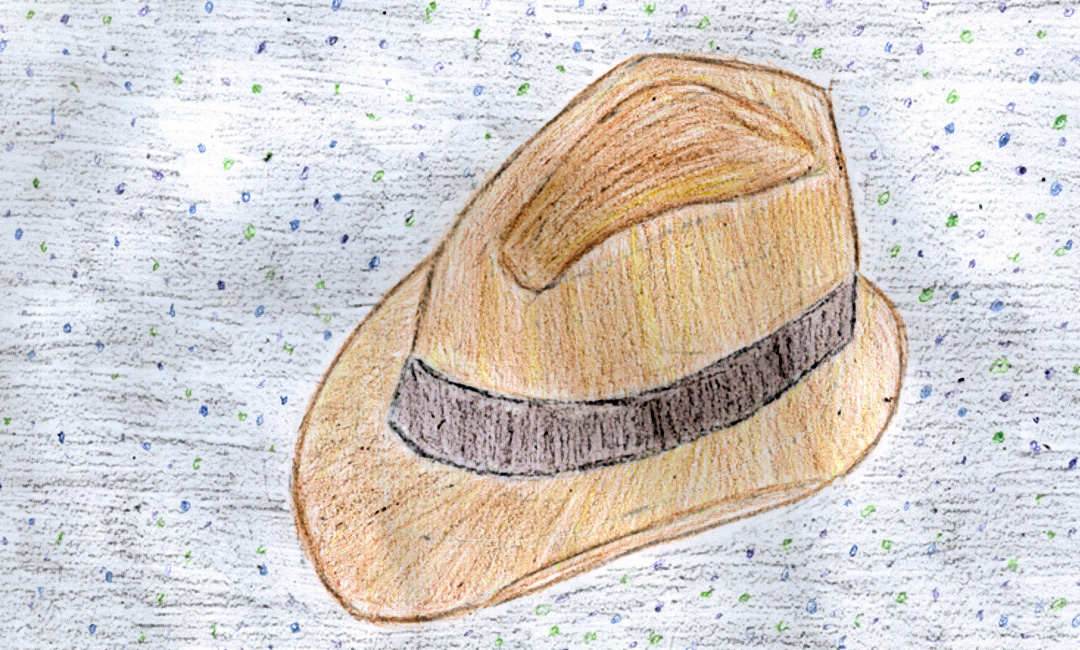
Scientists are baffled by recent data showing a continued rise in the number of fedoras worn in Macrapolis.
“The scientific community was almost certain that the fedora trend would begin to fade by now,” Fred Noble, special projects director at the Research Institute on Trends, tells The Bluffington Roach . “We severely underestimated people’s desire to appear artistic and just a tad-bit off-beat.”
The RIT first started tracking fedora statistics during the spring of 2008 — that’s when the popularity of the head-wear first burst onto Macrapolis’s fashion landscape, according to Noble. By 2010, fedora purchases had sky-rocketed. Over 33 percent of Macrappers, ages 18-51, owned a fedora.
“Those are extremely high numbers for a straw hat. We thought the popularity of the product had peaked that summer,” Noble says. “We expected to see a steady decline in the popularity of fedoras from that point on.”
The institute’s projections were way off.
Recent data gathered by the RIT, shows that as many as 70 percent of Macrappers owned and wore a fedora at least twice during the summer of 2013 — a near 40 percent increase from 2010.
The biggest surprise about the current popularity of the fedora — is that it was originally a wardrobe choice that reflected the individuality and uniqueness of its owner. Yet, despite the fact that the style is overwhelmingly mainstream now, many fedora-wearers still believe that the hat is a reflection of their inner-artist.
“If everyone is wearing fedoras, and everyone is going for the care-free artistic look, when will that stop being unique and just become standard?” Robert Jones, a large curmudgeonly black guy from The Onx, tells BluffRo.
Noble doesn’t see the trend slowing down anytime soon.
“It looks like this trend might be here for the long haul,” Noble says. “If our projections hold true, we could see anywhere from a 7 to 11 percent increase in the number of fedoras worn by the summer of 2014.”
Copyright 2014 © Bluffington Roach Media
 bluffingtonroach.com